Polynucleotides under eyes in London
Under-eye sessions from £220, published by the practitioners, with a course of three from £600.
London Polynucleotides connects you with practitioners at UNTIL Marylebone and UNTIL Soho who use polynucleotides under the eyes to thicken thin, crepey skin and soften the shadow it casts, over a course of three sessions.

The short answer
Under-eye polynucleotides, in short
Polynucleotides under the eyes are injections of purified DNA fragments, taken from salmon or trout, placed into the thin skin of the lower lid. They add no volume. They make that skin thicker, better hydrated and less crepey, so the blue or purple shadow from the vessels beneath it shows less. The change builds over about eight weeks and a course of three usually holds for six to nine months.
They suit a tired look that comes from the skin itself. They do not fill a hollow tear trough, move fat or remove bags, and most disappointment with the treatment comes from having it for one of those. Send an enquiry and the practitioner will name the cause at an assessment before recommending anything.
Under-eye polynucleotides at a glance
- Session30 to 45 minutes with numbing
- Course3 sessions, 2 to 3 weeks apart
- First changeAround week 4
- Full resultWeeks 8 to 12
- DowntimeBumps 1 to 3 days, bruising possible
- Published pricesFrom £220 a session
What polynucleotides do for the skin under your eyes
Crepey skin and fine lines under the eyes
Fine, crinkled lines under the eye come mostly from the skin thinning and losing water rather than from movement. That is the change polynucleotides act on. By prompting the skin's own collagen and elastin and helping it hold water, a course makes the lower lid look smoother and less papery, particularly in daylight, where crepey texture shows most. Deep lines at the outer corner that come from smiling are a different problem, set by the muscle, and polynucleotides soften them only a little.
Dark circles from thin skin
When the skin under the eye is thin, the small vessels beneath it show through as a blue or purple shade, darkest in the inner corner. Thicker, healthier skin hides them better, which is why this type of dark circle responds well to a course. Brown shadowing from pigment responds less, and a shadow cast by a hollow hardly at all. Pressing gently on the area helps tell them apart: a vascular shadow blanches, pigment does not. Dark circles under eyes treatment covers all three types.
A tired, dull look
Under-eye skin that looks dull and dehydrated, and holds concealer badly, often improves before anything else does. Most people notice it around week four, after the second session, as skin that looks brighter and takes make-up more evenly.
Who under-eye polynucleotides suit
Good candidates
People in their late twenties onwards whose under-eye skin has started to look thin, crepey or shadowed, who want it to look healthier without anything that changes the shape of the eye. It also suits people who have had tear trough filler and want the skin over it to improve, and people who were told the under-eye skin is too thin for filler.
Hollow under eyes and deep tear troughs
A hollow is lost volume under the skin, and polynucleotides add none, so a deep tear trough treated with them alone usually looks much the same afterwards. The usual answer to a hollow is filler, sometimes with polynucleotides to improve the skin over it. A practitioner should tell you which you have before you book; hollow under eyes treatment sets out the options.
Eye bags and puffiness
Bags are usually fat pushing forward under the eye, and puffiness is fluid that comes and goes with sleep, salt and allergies. Polynucleotides change neither. Firmer skin can make a mild bag look slightly less obvious, but a pronounced bag is a surgical question, and your GP is the first stop for swelling that is new or one-sided. Under eye bags treatment explains what helps.
Polynucleotides or tear trough filler?
They answer different problems. Tear trough filler is a hyaluronic acid gel placed deep under the eye to replace lost volume, and it changes the shape of a hollow on the day. Under-eye polynucleotides are placed in the skin itself, add no volume and improve its quality over about eight weeks.
When filler is the better fit
A visible hollow or a shadow cast by the rim of the eye socket, in someone whose skin is still reasonably thick. Filler under the eye needs a practitioner who treats the area often, because too much, or product placed too shallow, can look puffy or show as a blue tinge.
When polynucleotides are the better fit
Thin, crepey or shadowed skin with little hollowing, skin that is too thin for filler, or someone who does not want any volume added. They are also used before or after filler to improve the skin over it.
When both are used
Some practitioners treat a hollow with a small amount of filler and the skin with a course of polynucleotides. If both are planned, ask which comes first and how far apart, and get the price of the whole plan at the assessment.
What happens at an under-eye polynucleotide appointment
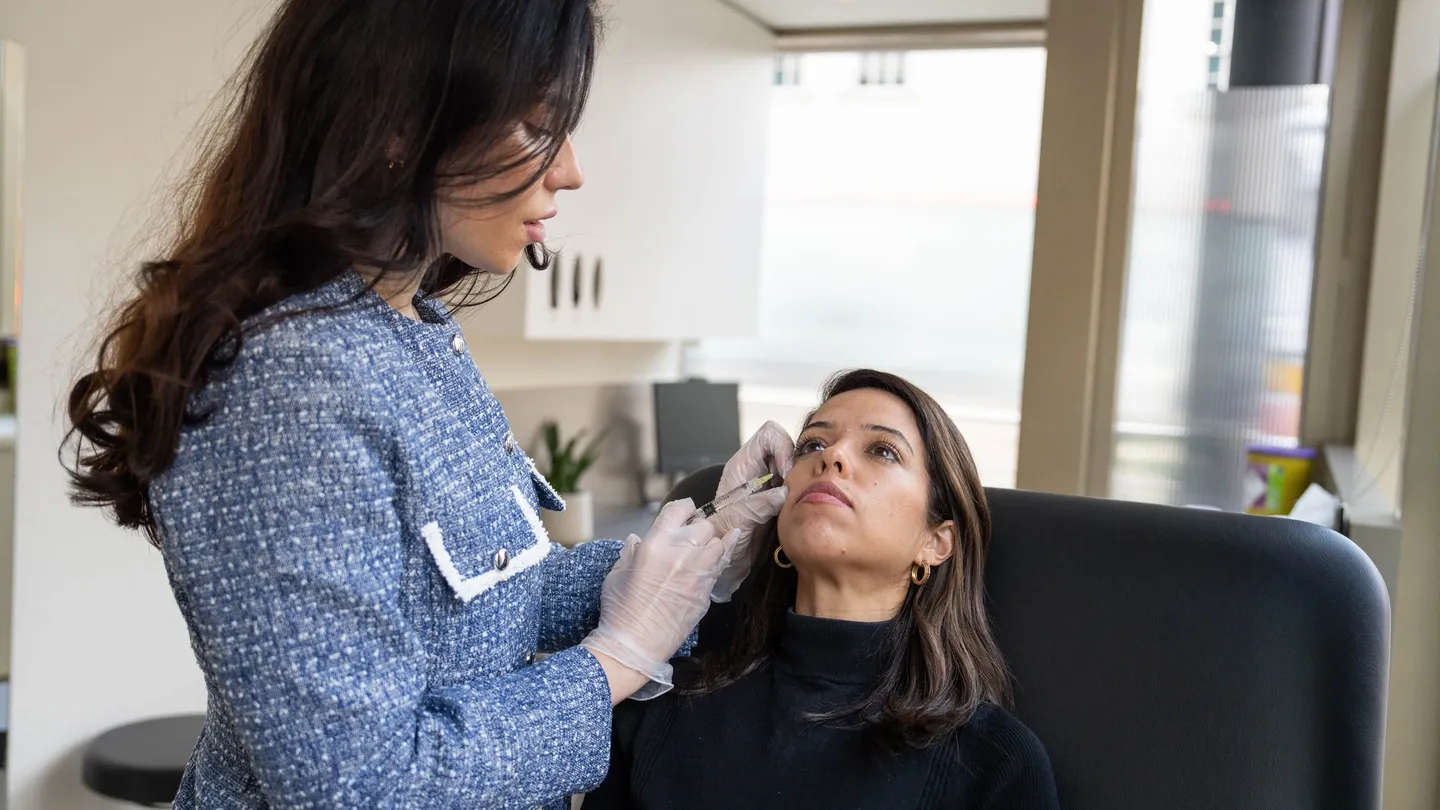
The practitioner first looks at the area in good light, often with you sitting upright and then tilting your head, to separate thin skin from a hollow, pigment or a bag. Numbing cream then goes on for around 15 to 20 minutes. The gel is placed with a very fine needle as a line of small deposits along the lower lid, or with a blunt cannula through one or two entry points, which some practitioners prefer because it bruises less. The injecting takes a few minutes per side and the whole visit 30 to 45 minutes. You leave with small bumps under each eye that settle within three days.
Polynucleotides under eyes before and after
Under the eyes, the before and after is a change in the skin you notice most in daylight and in photographs, not a change in shape.
- Days 1 to 3: small bumps along the lower lid, possibly a bruise. Concealer can go on after the first day.
- Week 4: after the second session, the skin looks less dull and concealer sits more smoothly.
- Weeks 8 to 12: crepey lines are softer and the vascular shadow is less obvious. Judge the course here.
Photograph your under-eyes before the first session, facing a window with no make-up, and again at week eight in the same place. Ask the practitioner for their own under-eye before-and-after photographs taken the same way; flattering light and a different head angle can make any under-eye look better.
Side effects of under-eye polynucleotides
Bumps and swelling
Small raised bumps along the lower lid are expected and settle in one to three days. Some swelling is common for a day or two and tends to look worse on waking; sleeping with your head slightly raised helps.
Bruising
The skin under the eye is thin and full of small vessels, so bruising is more likely here than anywhere else on the face. It can take a week to fade. Avoiding alcohol, ibuprofen and fish oil for 48 hours beforehand lowers the chance, and a cannula may too.
When to call the practitioner
Swelling that keeps growing, pain that throbs, heat, or any change in your vision needs the practitioner who treated you the same day. Ask before you leave how to reach them out of hours.
How much do under-eye polynucleotides cost in London?
At the practices London Polynucleotides connects you with, under-eye polynucleotides cost from £220 to £350 a session, with a course of three from £600. Those are the practitioners' own published prices, checked on 29 September 2026.
- A Soho practice: £220 a session, or £600 for a course of three.
- A Marylebone practice: from £240 a session for under-eyes, with a course of three usually recommended.
- A second Marylebone practice: £300 for the first session and £250 for each one after.
- A third Marylebone practice: from £350 a session for under-eye, face or neck.
The price is confirmed at your assessment, before anything is booked. Ask whether it covers one session or the course, and whether a review appointment is included. Polynucleotide injections in London sets out prices for the face, neck and scalp.
Under-eye polynucleotides near you
Under-eye polynucleotides are published by practices at both clubs. UNTIL Marylebone, 1 Orchard Street, is an 8-minute walk from Bond Street or Marble Arch; UNTIL Soho, 111 Charing Cross Road, is about 150 metres from Tottenham Court Road. Choose either club, or either, on the enquiry form, and read who gives the treatment before you do.
FAQ
Polynucleotides under eyes
questions answered
Can polynucleotides fix dark circles under my eyes?
It depends on the cause. Where the darkness comes from thin skin showing the vessels beneath, a course often helps noticeably. Where it comes from a hollow tear trough or from brown pigment, it helps much less. London Polynucleotides connects you with practitioners who identify which you have before you book.
Is an under-eye skin booster the same as polynucleotides?
Sometimes. Skin booster is a marketing term for any injectable that improves skin quality, and under the eyes it usually means either polynucleotides or a light hyaluronic acid. London Polynucleotides suggests asking which product a quote is for, because the two work differently and are priced differently.
How many under-eye polynucleotide sessions will I need?
Most people need three, two to three weeks apart, and some need a fourth where the skin is very thin. After that, one session every six to nine months keeps the result. The practitioner you meet through London Polynucleotides will set the number once they have seen your under-eyes.
How long do under-eye polynucleotides last?
A completed course usually lasts six to nine months before a maintenance session is needed. The skin gradually returns towards where it started rather than rebounding. London Polynucleotides notes that sun, smoking and very thin skin shorten the range, so the practitioner will estimate it for you.
Can I wear make-up after under-eye polynucleotides?
Leave eye make-up off for the rest of the day of treatment, because the injection points are open for a few hours. From the next day concealer is usually fine and can cover bruising. London Polynucleotides suggests clean brushes for the first week and taking contact lenses out the evening before.
Do under-eye polynucleotides make eyes look puffy?
Only briefly. The small bumps and some swelling last one to three days and can look puffier on waking. Because nothing adds volume, there is no lasting puffiness of the kind a misplaced filler can cause. London Polynucleotides advises booking away from important events for that reason.
Related Treatments
Get Started
Send the question first,
then see a practitioner in person.
London Polynucleotides • UNTIL Marylebone, 1 Orchard Street, London W1H 6HJ
Ask a PractitionerUNTIL Health Concierge replies to arrange an assessment at UNTIL Marylebone or UNTIL Soho. The practitioner confirms the price of a course before anything is booked.